Every online store in Poland knows to a tenth of a percent how many customers put a product in the cart and changed their mind. The metric has a name, a place in the weekly report and a person responsible for it. Exactly the same movement happens every day in front of a zoo ticket desk — with the difference that it is called “they walked away” and leaves no record in any system.
The reflex answer to such a queue is: a second till. It is expensive, countable and lands in the budget as a line someone must defend. The queue lands nowhere — and that is why it wins every cost conversation.
An hour in the ticket queue comes from arithmetic
The zoo in Opole, May this year. “At peak season residents and tourists could wait over an hour to buy a ticket,” Nowa Trybuna Opolska wrote. The venue serves about 200,000 people in the three warmest months of the year. The single-day record, from May 2021 and still unbroken, is nearly 9,000 visitors.
Those three figures look like a description of an organisational problem. Multiply them and under the surface you see ordinary arithmetic.
Two hundred thousand people spread over 92 season days average 2,174 people a day. Assume — this is my own assumption; the venue does not publish such a figure — that an average transaction serves 2.5 people, a family or a couple, and takes 40 seconds at the window including giving change and asking about a discount. That yields 870 transactions a day and nearly ten hours of uninterrupted work for one stand. Roughly how long an opening day lasts in season.
So at average attendance one till is used at one hundred percent. No coffee break, no printer-roll change, no situation where someone pays cash and change must be made from two hundred zloty.
Now the same arithmetic for the record day. Nearly nine thousand people give about 3,600 transactions, or 40 hours of work at one window — on an opening day that has ten of them. At that load an hour of queue is the only possible result that can happen.
For scale: according to a Polish Tourism Organisation report covering 955 venues, Polish zoos were visited in 2024 by 8 million people, and museums by 44.4 million. Opole’s peak season is 2.5% of annual traffic in the whole zoo category. One mid-size venue, one till, an hour of queue.
How much does a second till cost and why is that the dearest answer?
The answer a venue gives in such a situation is reflexive and logical. Opole Zoo president Aleksandra Czechowska announced it outright: “From June we will open an additional ticket desk to improve visitor service and shorten waiting time at the garden entrance.”
Let us count what that costs. Minimum wage in 2026 is PLN 4,806 gross, and full employer cost of such an FTE — PLN 5,790.28 a month. Annually: PLN 69,483. For one stand, at minimum wage, without weekend overtime without which at peak season the work makes no sense.
Now the counter-figure, because the amount alone means nothing. A ticket machine in Polish trade price lists costs PLN 18–45 thousand net, and its upkeep takes 15–30% of device value a year. For a PLN 30,000 machine, middle of the range, that is PLN 52,500–75,000 over five years.
The pairing is brutal in its simplicity: one till FTE for a year costs roughly as much as a ticket machine for five years. And that is a figure worth having in mind before anyone at the venue says “we’ll hire someone for the season.”
Both answers, though, share the same flaw and it matters more here than cost: they buy throughput at one point. At the entrance. The queue halves, and the venue still sells only where it placed a device or a person.
Ticket queues at tourist attractions have a second source
Handle time of one transaction is not a physical constant — it depends on what the person at the window pays with. And here Polish data are fresh and unambiguous.
A Maison & Partners study for the Polska Bezgotówkowa Foundation (August 2026) finds that 61% of Poles expect the ability to pay by card or phone at tourist attractions. At parking — 56%, at equipment rentals — 51%, at stalls and seasonal sales points — 48%. “Consumers increasingly treat the ability to pay cashless as a standard,” comments Monika Grabowska, managing director of the Foundation.
Expectation is not yet abandonment, though. How many people really leave?
The most-cited figure says that 82% of customers avoid places where they have to stand in a queue. Worth pairing it at once with the Polish 61% expecting cashless payment: the avoidance declaration is clearly stronger than the expectation declaration, which itself urges caution. From the same study: confronted with a queue, 58% finish the purchase — the remaining 42% go to a competitor or give up.
One tenth of that value is 4.2%, or 8,400 people on 200,000 visitors. At an average ticket of PLN 35 (Zoo Opole price list: PLN 46 full, PLN 35 concession, PLN 38 family) that is PLN 294 thousand a season — over four times the annual FTE cost that was meant to solve the problem.
Go ten times lower, to 0.42%, or one abandoning person per 238 entrants. That leaves PLN 29 thousand — still more than a seasonal till person costs for four months (4 × PLN 5,790.28 = PLN 23,161). At an assumption so cautious it is hard to challenge, lost sales still beat the cost used to treat them. And it is still the only line in this bill that appears in no statement.
Money that vanishes thirty metres farther on
So far the whole text has dealt with the entrance. That is convenient, because the queue before the entrance is visible and can be photographed. Harder to count — and usually larger — is sales that never happen inside the venue.
Animal feeding for five zloty, a train ride, a bouncy castle, coffee at a distant point, a donation to a tin. Each of those things shares a trait: the impulse lasts a dozen seconds, and the nearest place you can pay is thirty metres and one queue away. The impulse does not survive that.
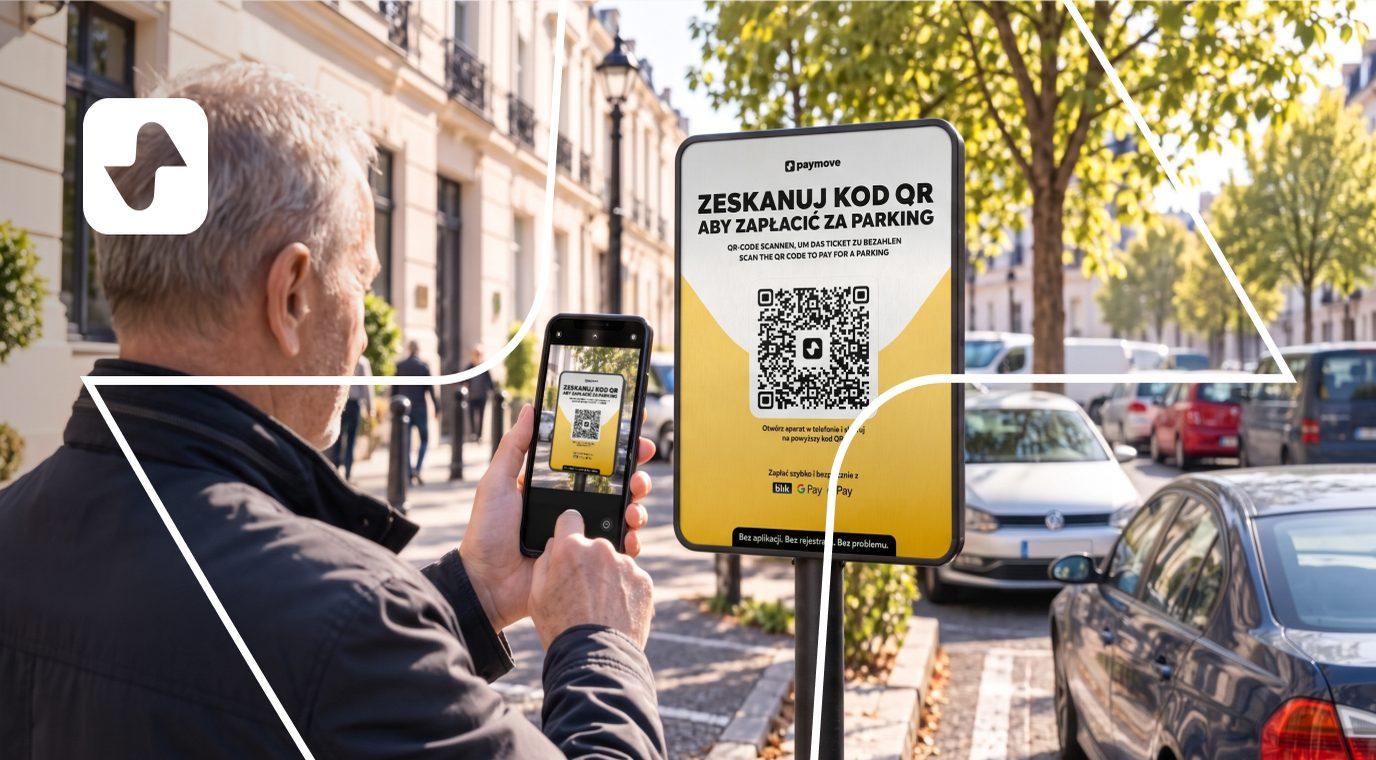
Paymove handles QR-code payment without an app and without registration — in practice that means a sales point costs as much as a board, and you can put it wherever the customer wants to pay and has no way to. At Garden of Lights that setup replaced the venue’s own QR codes with a shorter purchase path. At Gdańsk Zoo the same layer handles several thousand transactions a day at peak — several times the 870 we calculated above for one window. At the Great Elf Factory two add-on attractions can bring more than the admission ticket.
Five questions you must ask yourself before the next season
A bill worth doing calmly in October, not in July:
- How many transactions does one stand handle on the worst Sunday of the season? Not how many people entered — how many transactions passed through the window. That is the only figure from which queue length follows.
- What share of those transactions is cash? Each of them is a dozen seconds of difference, and at 870 transactions a day a dozen seconds make hours.
- How many points in the venue take payment today, and how many could? The gap between those two figures is the list of places where sales do not happen.
- Do you know how many people turned back from the queue? If the answer is “no,” that is the only cost line in this bill nobody challenges, because nobody sees it.
- Does another till FTE solve the problem, or buy one more year without a decision? PLN 69 thousand a year is an amount with which you can do more than put a second window in the same place.
Answering the first question takes one afternoon with an export from the ticketing system. Answering the fourth takes nothing, because that figure simply does not exist — and that is the most interesting thing that can be said today about ticket queues at Polish tourist attractions.