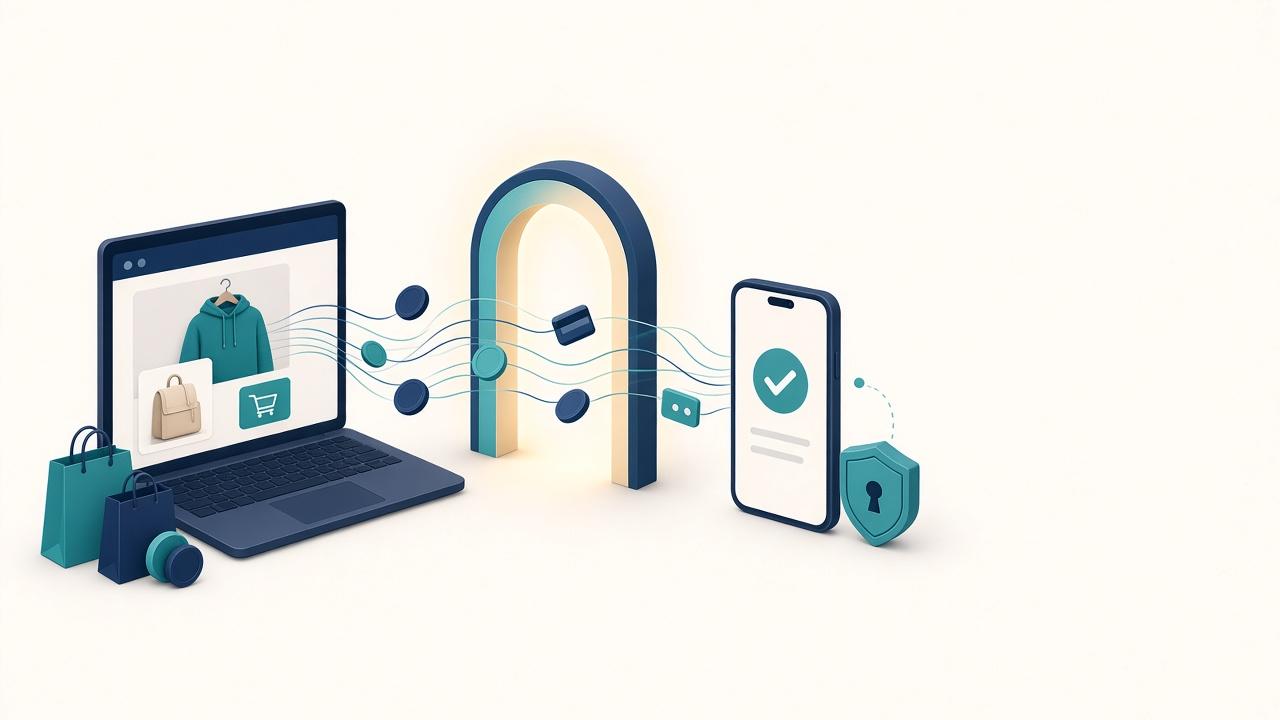
From 1 February 2026 an invoice issued in KSeF (Poland’s National e-Invoicing System) that the seller sends the counterparty by email as a PDF or hands over on paper must carry a QR code. The recipient scans it with a phone and gets confirmation that the document really exists in the Ministry of Finance system. But that code does not fill in a transfer form. So on one sheet of paper two things the recipient needs meet — and the state took care of exactly the less urgent one.
Meanwhile a Polish firm waits on average about 64 days to be paid on an invoice with a contractual term of about 43 days — according to this year’s European Payment Report by Intrum. Three weeks of lag on every invoice. The question worth asking before ordering any “payment accelerator” is: what share of those three weeks comes from the debtor having no money or not wanting to pay, and what share from payment simply being cumbersome?
Three different QR codes on an invoice, one name
Talk about an “invoice with a QR code” mixes three solutions that do entirely different things.
The first has been in Poland for almost thirteen years. In December 2013 the Polish Bank Association published a recommendation on a 2D code: the square on the invoice holds the recipient’s tax ID (NIP), a 26-digit account number, the amount in grosze, the recipient’s name and the payment title. A banking app reads it and fills in the transfer. A year and a half later one of the large banks was already promoting a “scan and pay” feature in its mobile app. Payment is still an ordinary transfer, though: the payer logs into the bank, confirms, and the seller learns about the inflow only when accounting matches the statement line to the invoice.
The second is the KSeF verification code mentioned above. It serves solely to check the authenticity of the document.
The third is the youngest and least known. The FA(3) e-invoice structure, in force from February 2026, has two optional fields in the payment section: a payment link and a thirteen-character KSeF payment identifier (IPKSeF). The Poland Cashless Foundation, together with the Ministry of Finance and payment organisations, prepared a shared standard for this: the payment operator attaches a link to the invoice, and the recipient pays as in an online shop — with BLIK or a card — without retyping the account number. The identifier ties the payment to a specific invoice, so the seller can know about it at once, without manually matching the statement to the receivables list.
The first code shortens retyping data. The third also shortens the path to confirming that payment arrived — and that is the other half of the problem, which few people think about until they see how much it costs to send a reminder to someone who paid yesterday.
A 21-day lag: a lot or a little?
“21 days” alone says little until you set it against a second figure from the same report. According to Intrum, on average 11.4% of Polish firms’ revenue arrives late, and the threshold beyond which delays start to threaten day-to-day operations respondents put at 11.5%. The safety margin is 0.1 percentage points. For a firm with PLN 10 million in annual revenue that means PLN 1.14 million arriving late — and the pain line sits ten thousand zlotys further on.
A second reference point comes from Coface. In its study of payments in Poland the average payment term rose from 46.2 days in 2024 to 54.1 days in 2025, or almost eight days in twelve months. Delays were experienced by 64% of surveyed firms, and the average delay was 53 days, the most since 2021. The two firms study different samples and define the term differently, so the numbers do not match — but the direction is the same: terms are lengthening, and actual payment comes even later.
Across the whole economy: according to BIG InfoMonitor, at the end of June 2026 business arrears reached PLN 47 billion, spread across more than 313,500 entities. On average PLN 150,000 per firm, a year earlier PLN 142,000.
Can a QR code do anything about that? It depends on who is not paying and why.
Forgot or chose to? Two kinds of delay
On the consumer side the answer is surprising. In the European Consumer Payment Report 2022, cited by BIG InfoMonitor, 41% of people behind on a bill said they simply forgot to pay. An empty account as the reason was given by 35%. Deliberately not paying: 7%. Forgetting beats lack of money by six percentage points — and forgetting is a process problem: how many steps separate opening the envelope or the email from paying.
In B2B the picture is different, and payment convenience alone explains far less here. In a BIG InfoMonitor study published a few days ago, 40% of firms admit they often or very often delay payments to counterparties, and 75.2% say the size of the partner or the length of the relationship affects when they pay. All invoices are treated equally by 21.4% of firms.
Paweł Szarkowski, CEO of BIG InfoMonitor, names it outright: “In practice this means an informal hierarchy is at work. When cash starts to run short, the order of transfers is decided not only by the invoice due date but also by how important the counterparty is to the firm’s activity.”
Intrum adds the bargaining-power side: 55% of Polish firms agreed to longer terms under pressure from large corporations, and 58% accepted terms longer than they consider comfortable solely out of fear of losing the client.
Two populations of delay need two different diagnoses. A consumer who forgot a water bill, and a finance team that deliberately moves a transfer for a small subcontractor to the end of the queue, are late for entirely different reasons. A QR code on the invoice hits the first case.
Where a QR code on the invoice makes a difference: in the reminder
One-scan payment helps most in a reminder that arrives after the due date.
According to BIG InfoMonitor, 27% of firms start first collection actions within a week of the due date, 22% no later than after two, and 15.5% react at once. The most common tools are a phone call (48%), email or SMS (44%) and a formal demand for payment (40%). Each costs an employee’s time or a stamp, and each ends with the same instruction: “please transfer to account….” That is the same retyping of 26 digits that failed the first time.
Here the mechanism works twice. On the debtor’s side a reminder with a payment link or code turns “I have to sit down to online banking” into thirty seconds with a phone. On the creditor’s side a payment tied to an identifier lands in the system at once, so the next reminder does not go out to someone who already paid. It is worth counting how many calls in the receivables team concern invoices paid the day before. No public report gives that number, and every firm can pull it from its own system in one afternoon.
Payer behaviour favours such a setup. BLIK handled 1.6 billion transactions in the first half of 2026, on average 8.7 million a day, and has 21.6 million active users. The same people pay for online shopping in two clicks, and still pay a rent, electricity or service bill by retyping an account number from a PDF. The invoice recipient does not need to learn anything. It is enough that the issuer stops requiring a procedure from a decade ago.
What a QR code on the invoice will not fix?
- Money that is not there. A firm that is late because it is itself waiting on its customers — trade, industry and construction hold the most arrears — will not pay faster only because paying became more convenient.
- Hierarchy. If a large buyer deliberately pays a small supplier last, a code will not change its priorities. One can hypothesise that when two invoices are of similar importance, the one that can be paid in one move goes out faster — but none of the cited studies measured that, so it remains a hypothesis.
- Disputes. An invoice challenged on amount or scope of service waits for clarification, and the convenience of a transfer will not speed that up.
- And finally adoption. The payment standard for e-invoices is voluntary, and the fields in the FA(3) structure are optional. The first certified operator appeared in February, and more were announced then. Public data on how many invoices actually carry a payment link I was unable to find.
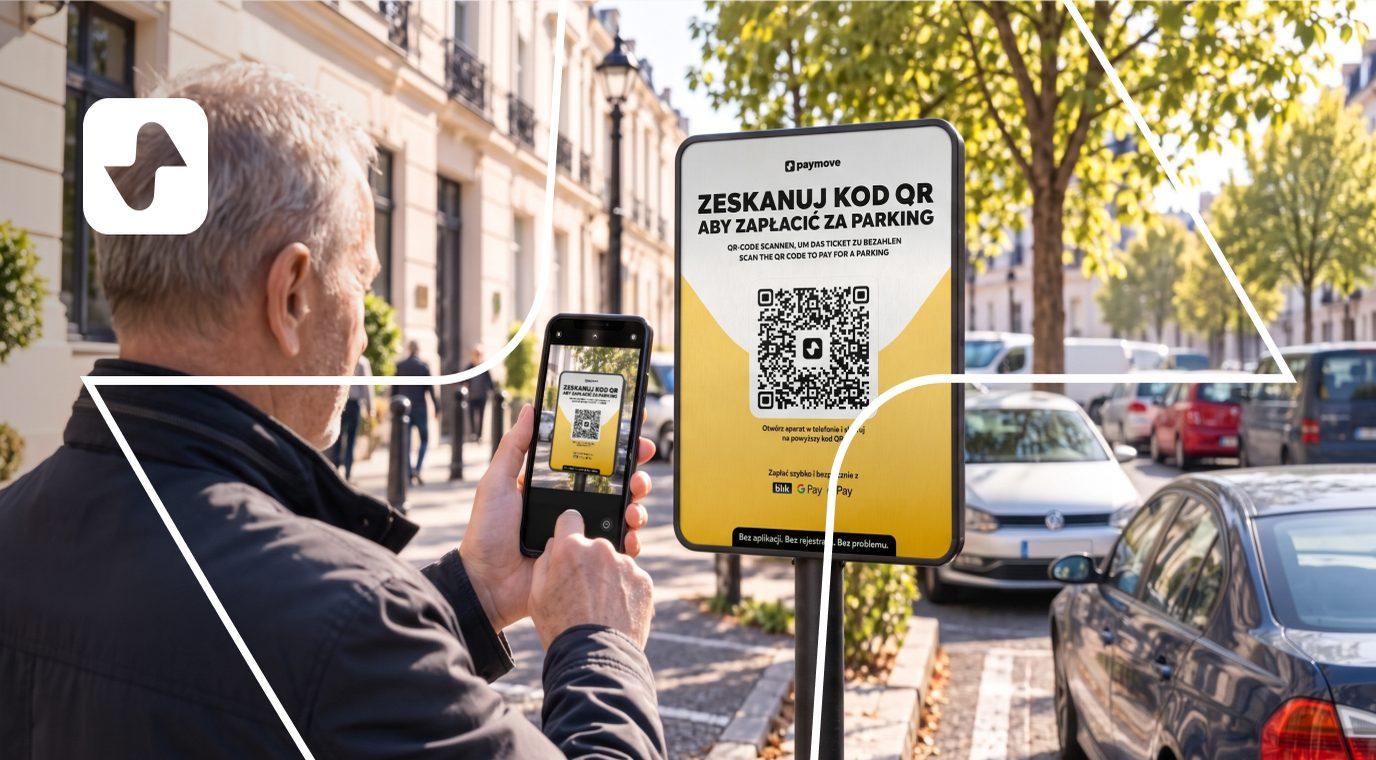
DocPay in Paymove works in that logic. The issuer’s system creates for every document — invoice, bill, demand for payment — a separate payment request with its own identifier and gets a unique QR code to place on the document. The payer scans it with the phone camera and pays with BLIK, Google Pay or Apple Pay, without installing an app and without creating an account.
The issuer gets confirmation by webhook before anyone opens a statement, and funds reach the account on the next business day. Integration is described in public documentation with a sandbox. DocPay shortens the path for those who want to pay and delay because it is inconvenient; on the four barriers described above it has no effect.
How to check how many of your receivables are the process problem?
The cheapest test does not require changing invoices. It is enough to review the list of overdue receivables from the last quarter and split it into two groups: mass and low-value documents (bills, fees, small invoices, demands) and large B2B invoices. If the lag concentrates in the first group, you are dealing mainly with friction and a payment code has a real chance of shortening it. If in the second, the problem sits in hierarchy and bargaining power, and tools have to be sought in the contract, collateral or receivables insurance.
The second step is an experiment on reminders, because there the cost is lowest and the effect easiest to measure. Half the reminders go out with a payment code, half the old way. After two billing cycles you compare the median days from reminder to payment and the number of collection contacts in each group. Your own figure, measured on your own debtors, will be stronger than any multiplier from a sales deck — including ours.
With a 0.1 percentage-point margin between “we’re managing” and “we have a problem,” even a few days recovered on part of the portfolio matters. You only need to know which part.