Updated 19 November 2026. 8 min read.
In short
- A chargeback is a card network procedure (Visa, Mastercard) in which the customer's bank reverses a card payment and takes the money back from you through your payment provider.
- The customer's bank usually has 120 days to raise a dispute. You only get as many days to respond as your payment provider gives you.
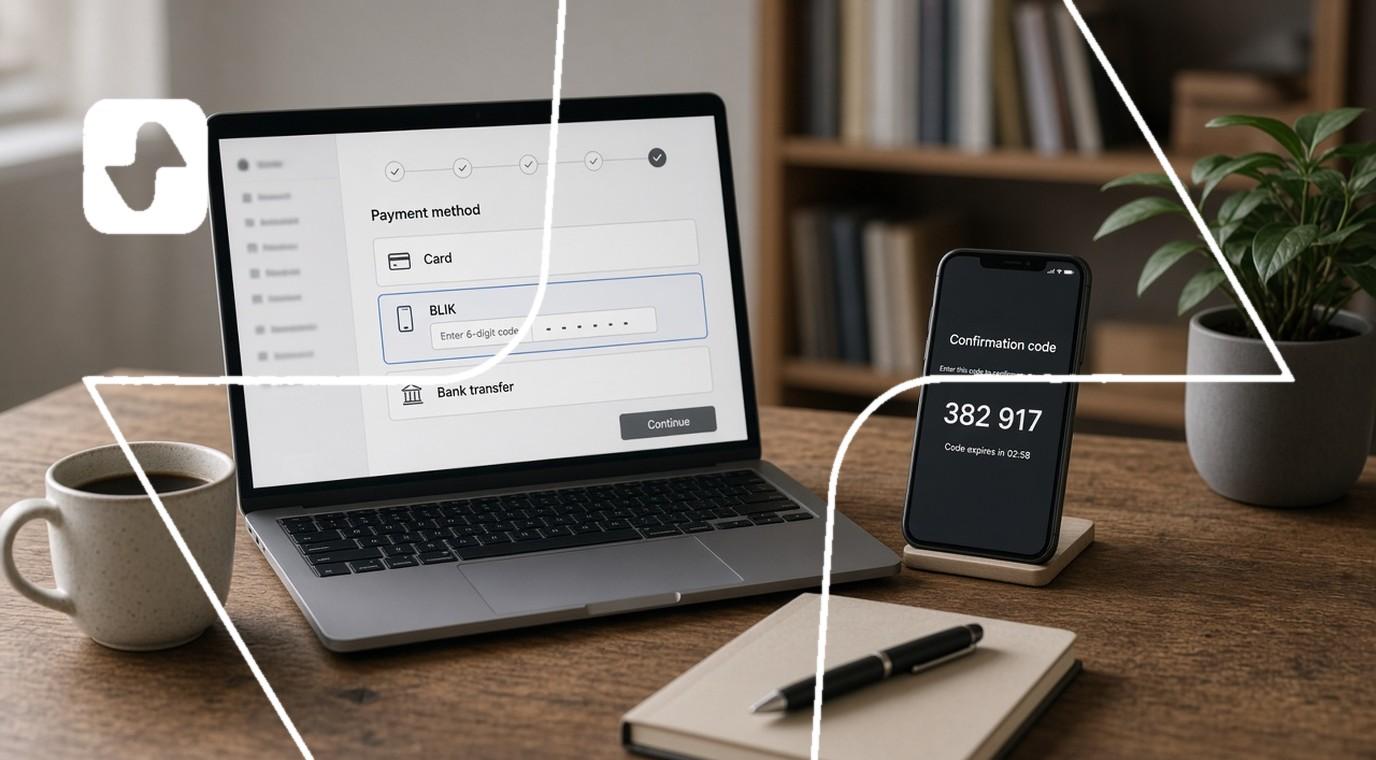
- BLIK payments have no chargebacks. Disputes about goods paid with BLIK are settled directly between you and the customer.
- The best protection: a store name customers recognize on their statement, proof of delivery, fast refunds and 3D Secure for cards.
If you sell to customers in Poland, two payment methods matter most: BLIK and cards. They handle disputes in completely different ways. With cards, the customer's bank can pull the money back months after you shipped the order. With BLIK, it cannot. This guide explains how card chargebacks work, which deadlines apply in Poland and how to keep disputes to a minimum. New to the Polish market? Start with our guide on how to accept BLIK payments in Poland.
What is a chargeback?
A chargeback is a card payment reversed at the customer's request. The customer does not come to you. They go to the bank that issued their card. The bank sends the dispute through the Visa or Mastercard network to your payment provider, and the provider takes the disputed amount from your balance.
Chargebacks are card network rules, not law. That is why they apply to card payments (including cards in Apple Pay and Google Pay) and not to bank transfers or BLIK.
How does a chargeback work? 5 steps
- The customer disputes the payment with their bank. For example: "The parcel never arrived" or "I did not make this payment".
- The bank raises the dispute in the card network with a reason code.
- Your payment provider notifies you. The disputed amount is usually debited or held right away. A dispute fee may apply, depending on your contract.
- You respond with evidence before the deadline in the notice: order confirmation, proof of delivery, messages with the customer.
- The customer's bank decides. If your evidence is enough, the money comes back to you. If not, the customer keeps it. The dispute can move to a further stage in the network.
The whole process often takes from a few weeks to a few months.
Chargeback deadlines in Poland
Situation | Deadline | Source |
|---|---|---|
Fraud dispute, online card payment | usually 120 days from settlement | Visa Core Rules, Mastercard Chargeback Guide |
Goods not received | up to 120 days from the transaction or from the last expected delivery date | Visa Core Rules |
Services paid far in advance or interrupted | 120 days from when the customer learned of it, 540 days at most | Mastercard Chargeback Guide |
Merchant side response in the card network | 30 days (Visa), 45 days (Mastercard) | card network rules |
Your response to your payment provider | shorter, usually a few days to two weeks | your provider contract and the dispute notice |
Unauthorized payment reported to the bank (any method) | up to 13 months from the debit | Polish Payment Services Act, art. 44(2) |
Bank refunds an unauthorized payment | by the end of the next business day after the report | Polish Payment Services Act, art. 46(1) |
Your refund after a consumer withdraws from a distance contract | within 14 days of the notice | Polish Consumer Rights Act, art. 32(1) |
What this means for you: a chargeback can arrive four months after you shipped. Keep order evidence for at least 6 months, and up to 18 months for services sold in advance.
Chargeback vs refund
Refund | Chargeback | |
|---|---|---|
Who starts it | You, at the customer's request | The customer's bank |
Where the customer goes | To you | To their bank |
Who decides | You | The customer's bank, under Visa and Mastercard rules |
Cost to you | The refunded amount | The disputed amount, often a dispute fee and the time to gather evidence |
Effect on your provider account | None | Many disputes can trigger extra account reviews |
Payment methods | Any | Cards only |
The simple rule: if the customer is right, refund them before they go to their bank. A refund costs you the purchase amount. A chargeback usually costs more. To see how refund and dispute fees add up to the real cost of a gateway, read Payment gateway fees: what you really pay.
Does BLIK have chargebacks?
No. A BLIK code payment debits the customer's bank account and is not a card transaction. The BLIK scheme rules (§ 8(1)) state that banks and the scheme operator are not liable for delivery of goods or their conformity with the contract. Such claims are settled directly between the customer and the merchant.
In practice:
- If the customer says the parcel never arrived, they contact you, not their bank. You handle it as a normal complaint.
- The customer's bank handles problems with the payment itself, such as a double debit. The customer files the complaint with the bank whose app they used.
- If someone paid without the customer's consent, the customer reports an unauthorized payment to their bank under the Payment Services Act. That is not a chargeback.
- The one exception is contactless BLIK in physical stores, which runs on Mastercard technology. Online, customers pay with a code, so this does not apply to your web store.
You still owe customers the usual consumer rights: complaints about goods and the 14-day right of withdrawal.
9 ways to prevent chargebacks
- A name customers recognize on the payment page and the bank statement.
- Clear description and delivery date: price, what exactly is in the order, when it arrives.
- Proof of delivery: tracking number, delivery confirmation, signature for higher-value orders.
- Easy contact: email and phone where customers can see them. A customer who reaches you is less likely to call the bank.
- Fast refunds when the customer is right. A refund almost always costs less than a dispute.
- 3D Secure for cards. When the customer confirms a card payment in their banking app, liability for fraud disputes usually shifts to the customer's bank. It does not cover "not received" or "not as described" disputes.
- An evidence archive: order, terms acceptance, messages, download logs for digital products. Keep it for at least 6 months.
- Fair subscriptions: a reminder before renewal and one-click cancellation.
- BLIK as the first payment method. Disputes about goods are settled with the customer, not reversed by a bank months later. This matters most for small baskets, where one dispute can wipe out the profit from many orders.
What to do when you get a chargeback
- Check the reason and the deadline in your provider's notice.
- Decide whether to fight or accept. If the customer is right or the amount is small, accepting can be cheaper.
- Match evidence to the reason: proof of delivery for "not received", the product description from the day of purchase for "not as described", 3D Secure confirmation and delivery address for fraud.
- Respond on time, briefly and with attachments. A late response usually means you lose.
- Learn from it. If disputes repeat, fix the description, delivery or the name on the statement.
Payments in Poland with Paymove
Paymove is a Polish payment gateway. Your customers pay with BLIK, Visa and Mastercard cards, Apple Pay, Google Pay, pay-by-link bank transfers and PayPo. BLIK has no chargebacks, so BLIK payments cannot be reversed by a bank months later.
- You issue refunds yourself, from the Paymove dashboard or through the API. The result arrives by webhook, just like a payment confirmation. API refunds are switched on at your request.
- Card payments are switched on after business verification (KYC) and a risk assessment.
- Pricing: PLN 0 to start, PLN 0 per month and 1.29% per transaction, a base rate that goes down as your business grows. No fixed fee per transaction, PLN 0 for the dashboard and payouts. You pay the fee after the money reaches you. Payouts on every business day, no fixed-term contract.
- Paymove is a Small Payment Institution registered with the KNF, the Polish Financial Supervision Authority (MIP 245/2024). Today Paymove serves businesses registered in Poland. Support for businesses registered outside Poland is coming soon.
FAQ
What is a chargeback?
A card payment reversed by the customer's bank at the customer's request, with the money taken back from the merchant through the payment provider.
Does BLIK have chargebacks?
No. BLIK code payments are not card transactions. Disputes about goods are settled between the customer and the merchant, and problems with the payment itself go to the customer's bank.
How long does a customer have to file a chargeback?
The customer's bank usually has 120 days from settlement or from the expected delivery date. For some services paid in advance, up to 540 days.
What is the difference between a chargeback and a refund?
You issue a refund at the customer's request. A chargeback is started and decided by the customer's bank, and it usually costs you more.
Does 3D Secure prevent chargebacks?
Only fraud disputes. When the customer confirmed the payment in their bank, liability for fraud usually shifts to the customer's bank. "Not received" and "not as described" disputes still apply.
What is friendly fraud?
A dispute where the customer is not cheating but does not recognize the payment on their statement or forgot the purchase. A clear store name and easy contact help.
Sources: BLIK Mobile Payments System Regulations, single-session model (§ 8(1)); blik.com; Visa Core Rules; Mastercard Chargeback Guide Merchant Edition (13 May 2025); Polish Payment Services Act (art. 44(2), art. 46(1)); Polish Consumer Rights Act (art. 32(1)). As of 19 November 2026. This article is not legal advice.